
Last updated November 15, 2026
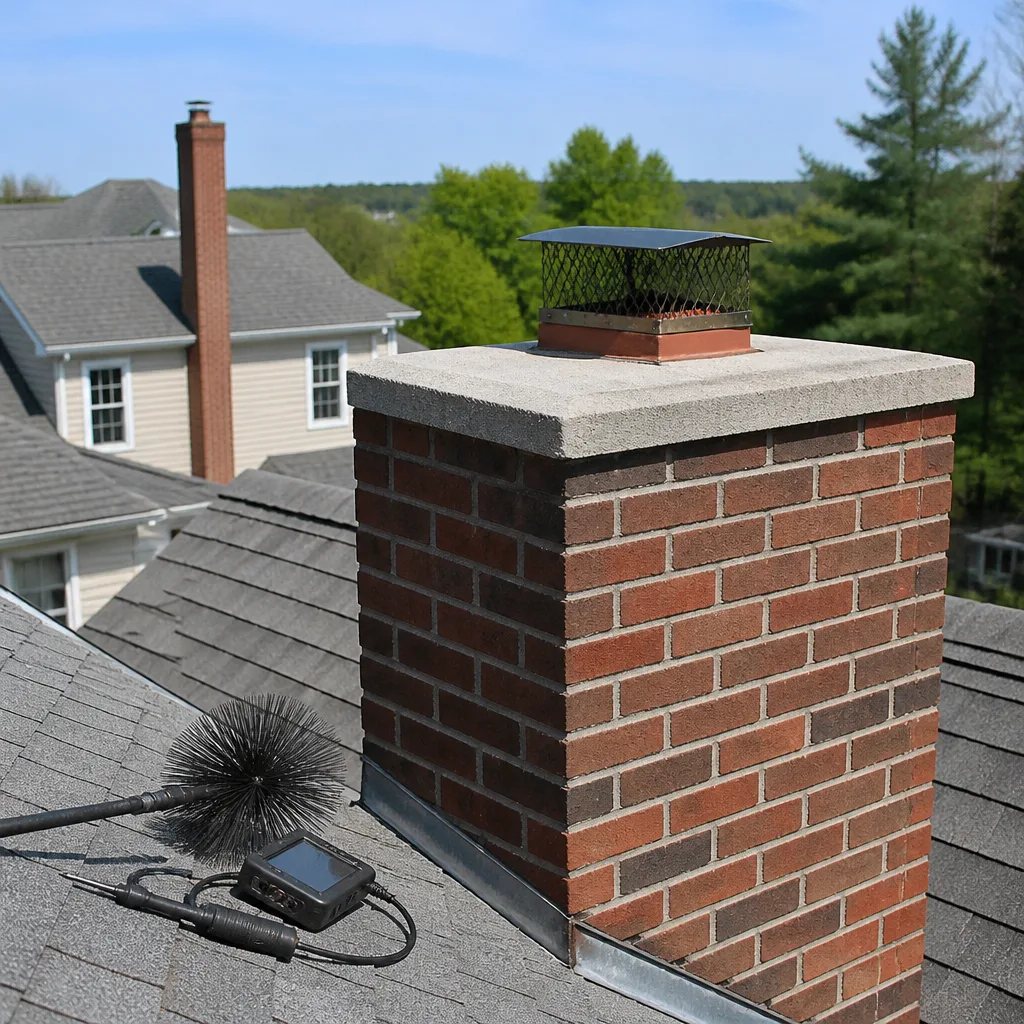 Sweep & inspection
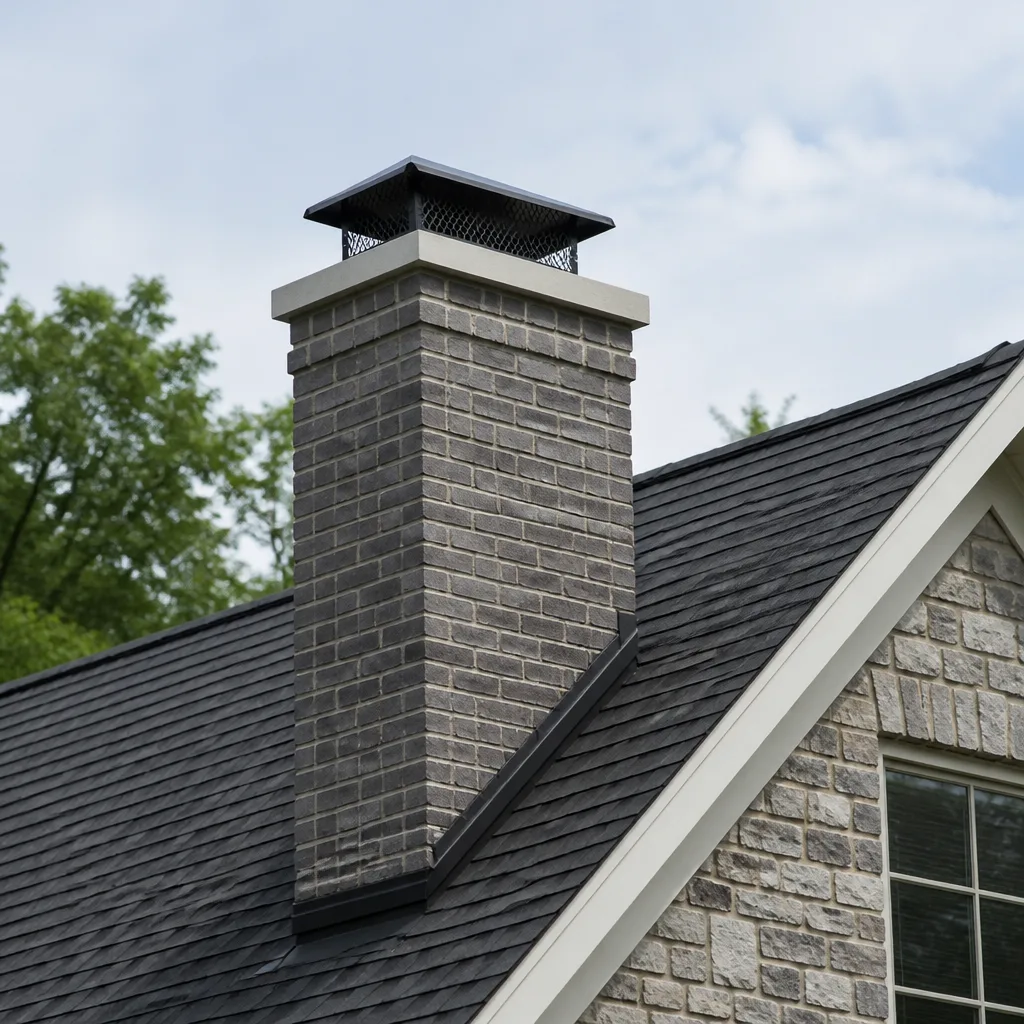 Caps & crowns
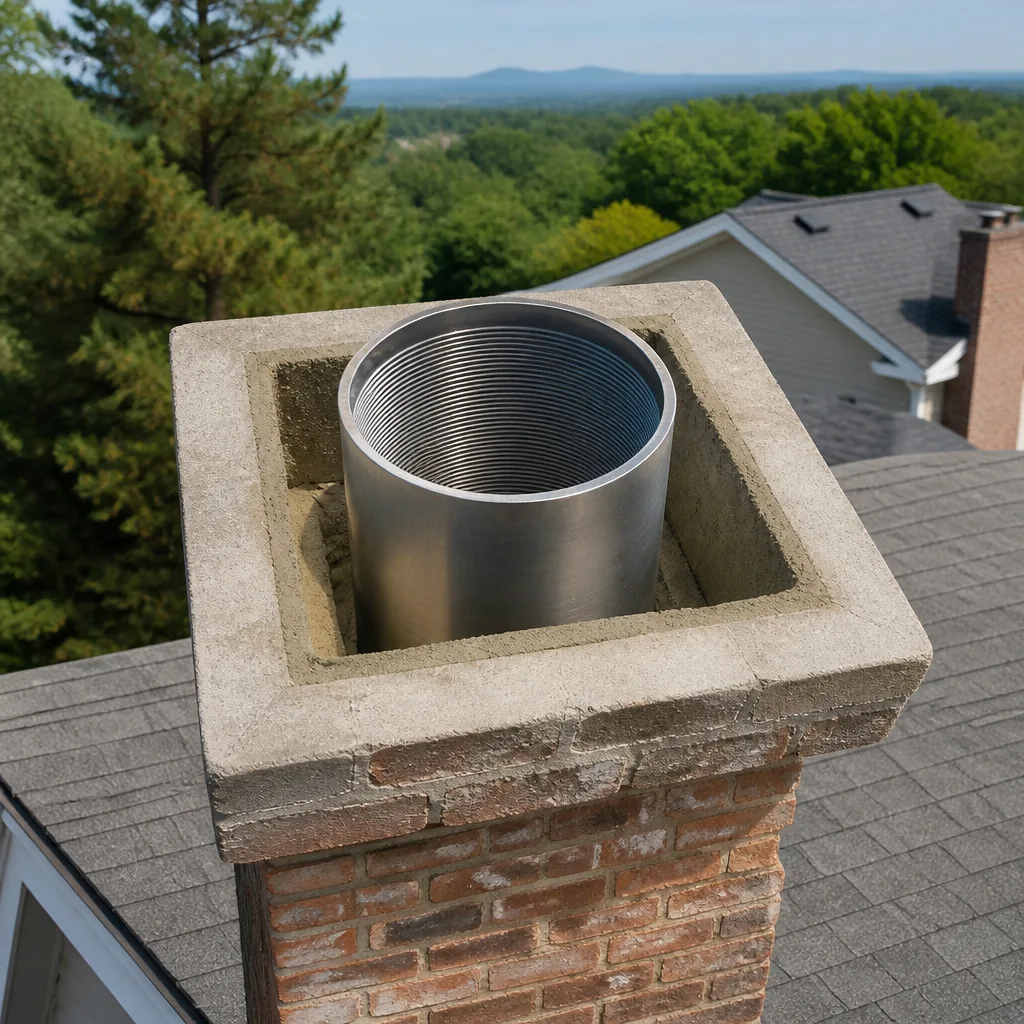 Flue relining
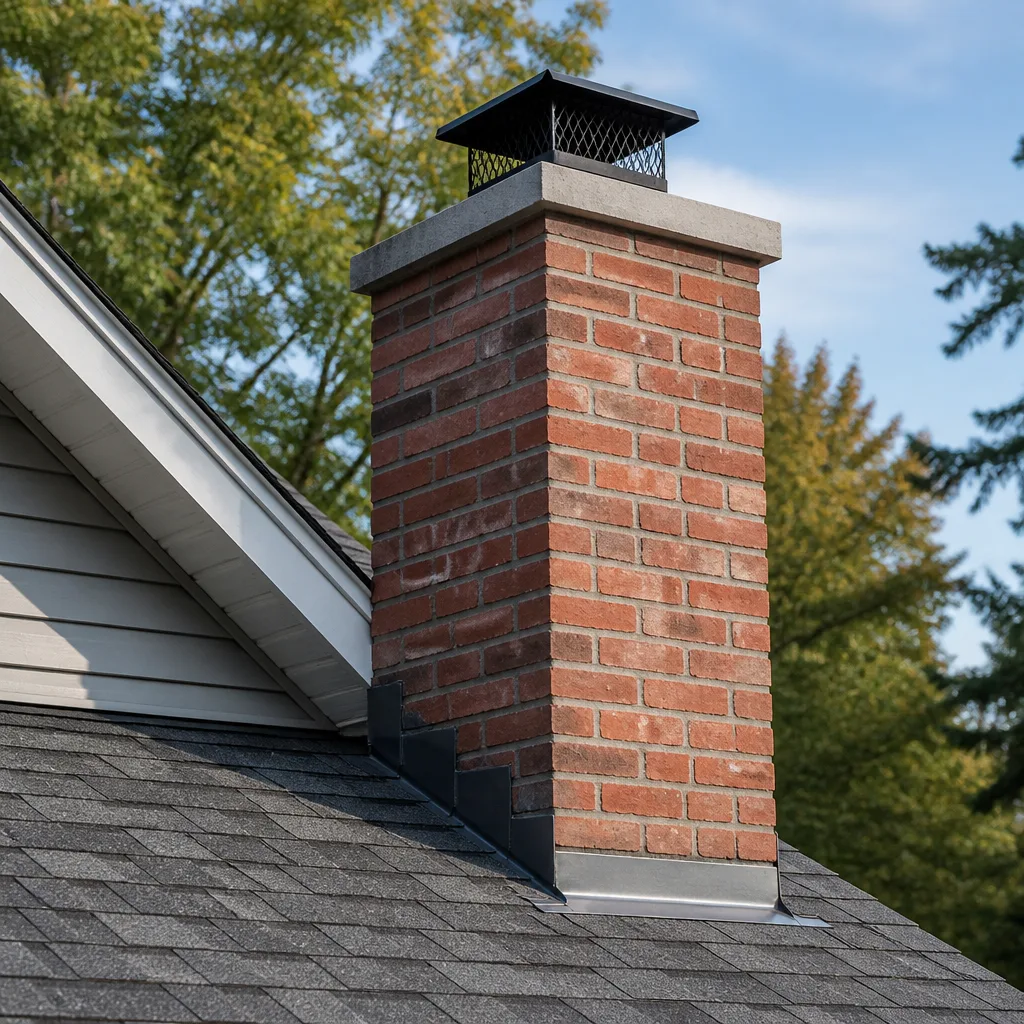 Masonry repair
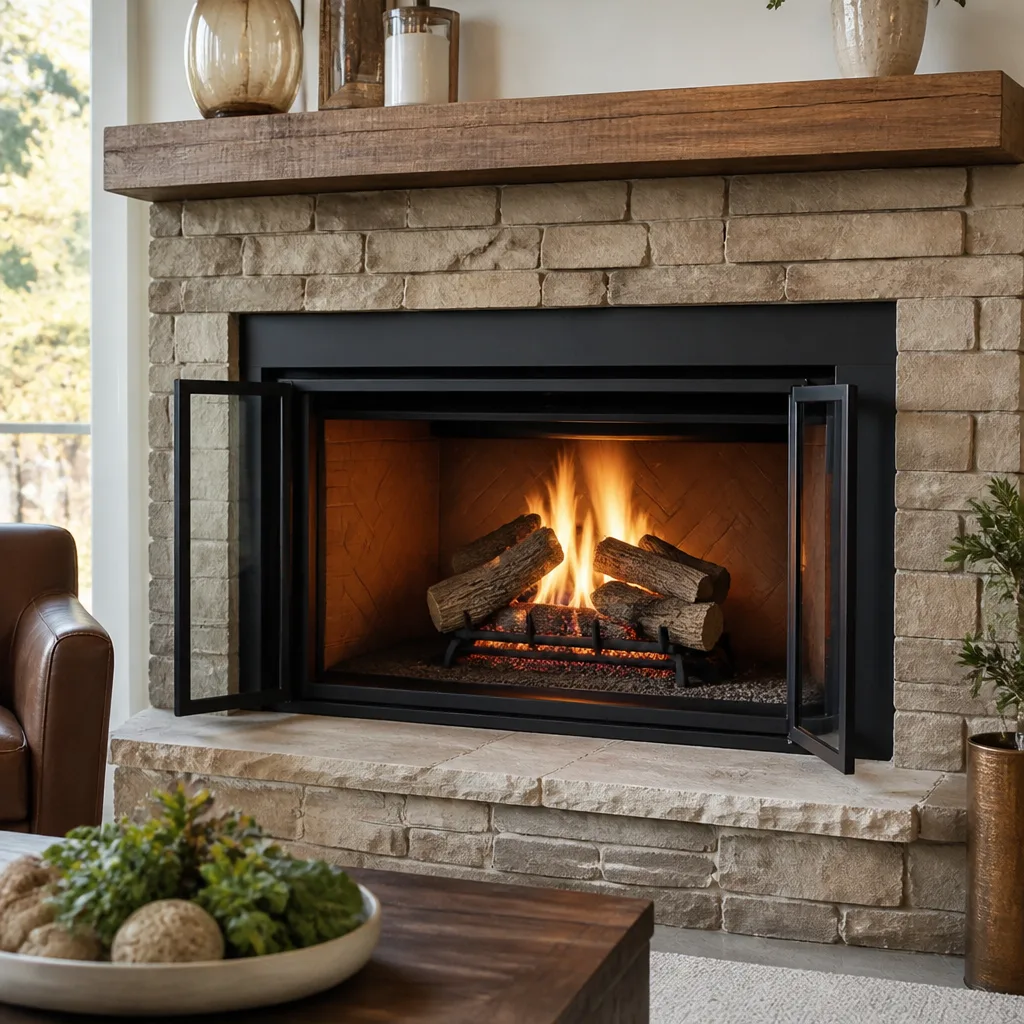 Gas fireplace service
Level 1 sweep and inspection to the NFPA 211 annual standard - flue, crown, cap, and flashing checked and photographed
Chimney sweep logs do not sweep chimneys. They loosen some creosote - which then falls where a brush and vacuum still have to collect it.
Chimney Sweep Maintenance Checklist for Broken Arrow Homeowners
The most expensive chimney repairs in Broken Arrow follow a predictable pattern: they start with a small thing a homeowner could have spotted themselves if they’d known what to look for. A cracked chase cover, a damper that stopped sealing years ago, a hairline crack in the smoke chamber parging. None of these announce themselves. They sit quietly through the off-season, and then the first cold snap arrives, you light a fire, and the problem you didn’t know about is suddenly the only thing between you and a safe chimney. This guide gives you a checklist timed to Broken Arrow’s actual weather, not a generic seasonal template. You’ll learn what to check yourself, what genuinely requires a certified sweep, and how to track your chimney’s condition year over year.
Quick Answer
A chimney in Broken Arrow needs sweeping once a year if you burn wood regularly, and an annual inspection regardless of how often you use the fireplace. The most critical window for a chimney sweep in Broken Arrow runs from late September through October, before the October – March burn season begins, with a follow-up visual check after storm season in April – June. Homeowners can self-verify roughly a dozen items from the ground and from the firebox; damper seating, smoke chamber parging, and chase cover condition are the three most commonly skipped items that require professional eyes.
Styles & brands we work with
- Sweep & inspection
- Caps & crowns
- Flue relining
- Masonry repair
- Gas fireplace service
Table of Contents
- Why a Chimney Checklist Should Be Built Around Broken Arrow’s Seasons
- The Month-by-Month Chimney Maintenance Calendar for Broken Arrow
- What You Can Check Yourself (No Ladder Required)
- What Requires a Certified Chimney Sweep
- The Three Components Every DIY Checklist Misses
- How to Document Your Chimney’s Condition Year Over Year
- Broken Arrow Damage Patterns: What Our Climate Does to Chimneys
- Year-Round Habits That Prevent Costly Repairs
Why a Chimney Checklist Should Be Built Around Broken Arrow’s Seasons
A maintenance checklist works when it’s timed to what actually happens around your house. A generic “spring and fall” checklist misses half of what Broken Arrow throws at a chimney in a given year.
Broken Arrow sits in a part of Oklahoma where the two seasons that matter most to a chimney are dramatically different. The burn season runs October through March, when you’re firing the fireplace or running a fuel-burning heating appliance most days. That’s the window when creosote accumulates fastest and when any existing defect gets tested under real heat. The storm season runs April through June, when hail, high wind, and driving rain hit the exterior of the chimney and roof. Between the two, summer heat expands and contracts the masonry and chase cover, which is when small cracks widen.
Treated separately, each season has its own checklist. Treated together, they interact. A chimney that passed a sweep in October can develop a chase cover problem in May and be a different system by the following fall. The point isn’t to check it more often than once a year. It’s to check the right things at the right time so that nothing slips through.
This is why we frame the whole guide around your calendar rather than ours. Our technicians have up to 8 years of experience, and the pattern that shows up most often isn’t the chimney that was never checked. It’s the chimney where the homeowner checked one thing carefully and assumed the rest of the system was fine. Broken Arrow homes with wood-burning fireplaces, gas log sets, and older masonry chimneys each have their own version of that story.
The Month-by-Month Chimney Maintenance Calendar for Broken Arrow
Here’s the checklist organized by month. Not every item applies to every home, but every home has items from each cluster. Print it, stick it on the fridge, and cross off what you’ve done.
- September (pre-season sweep window): Book your annual chimney sweep and inspection. This is the busiest month for every chimney company in Broken Arrow, so scheduling early in the month gives you breathing room before the first cold snap. Clear ash from the firebox, confirm your cap and spark screen are intact, and check that the damper opens and closes fully.
- October (first burns): Burn small, hot fires for the first few weeks rather than large, smoldering ones. Watch for smoke spillage into the room, which can signal a draft problem or a blocked flue. Test the smoke detectors and carbon monoxide alarms on every level.
- November through February (peak burn season): Empty the ash pan regularly without letting it overflow. Watch for a hissing or popping sound from the firebox, which can indicate moisture in the wood or a creosote issue. Note any new smell, draft change, or persistent smoke in the room. Keep the area around the hearth clear.
- March (end of burn season): Sweep one more time if you’ve burned consistently through the winter, or at minimum get a visual inspection. Shut the damper for the off-season so cool air and pests don’t come down.
- April through June (storm season): After any significant hail or wind event, walk the yard and look at the chimney from the ground. Check the chase cover, the cap, and the roof flashing line for visible damage. Look for granules of masonry on the roof or patio below the chimney, which suggest spalling.
- July and August (hot, dry stretch): Watch for efflorescence (white staining) on the exterior masonry. Have any masonry crack sealed before fall. This is a good month to get the annual inspection out of the way early, since the schedule is lighter and any repair can be planned calmly.
- Year-round: Only burn seasoned wood. Keep a log of what you burned, when, and how much. That record matters more than most homeowners realize.
We’ve seen how a small reminder on the September calendar item saves a homeowner from the October scramble. If you’re in one of the Broken Arrow neighborhoods where every chimney on the street was built with the same materials, you’ll often find that a problem in one house shows up in others. That’s a good reason to know your neighbors’ history too.
What You Can Check Yourself (No Ladder Required)
Most of the checklist is safe to do yourself from the ground and from the firebox. A ladder up to the roof is not one of them; leave that to a professional. Here’s what a diligent homeowner can verify without ever climbing.
- From the ground: Look at the top of the chimney with binoculars. The cap should be intact, the spark screen in place, and the chase cover (the metal or masonry top) free of visible rust or holes. Look for staining or soot streaks on the exterior brick, and check the ground below the chimney for fallen masonry chips.
- From the firebox: Shine a flashlight up into the firebox and look at the firebrick. Small hairline cracks are common and often harmless; chunks missing or openings wider than the width of a coin deserve a professional inspection. Look for creosote buildup on the flue walls: a thin, flaky layer is normal before a sweep, but a shiny, glazed surface is a sign to book one promptly.
- The damper: Open and close it fully several times. It should seat cleanly, without wobble. A damper that won’t close all the way is leaking heat and letting cold air (and sometimes pests) into the house year-round.
- The smoke chamber (as far as you can see): With a flashlight, look up past the damper into the smoke chamber. It should be smooth and angled, not rough or stepped. Rough parging is a professional fix, but knowing whether yours looks smooth or rough tells you what to ask about.
- The hearth and firebox liner: Check for cracks and gaps between the firebrick and the mortar joints. Any gap you can fit a business card into is worth having looked at.
- Upstairs and downstairs signs: Look at the wall and ceiling around the chimney chase for water stains, and check the attic for daylight or moisture near the chimney penetration.
None of these replace a professional chimney inspection, but all of them tell you something concrete to mention when you book one. A homeowner who can say “the chase cover has rust spots” or “the damper doesn’t seat cleanly” gets a more focused appointment than one who just says “please check the chimney.”
What Requires a Certified Chimney Sweep
Some checks belong with a trained professional. Not because they’re hard, but because they involve heights, cameras, or safety systems that need calibrated tools and a trained eye to read correctly.
Book a professional for anything involving the roof. That includes a full look at the chase cover from above, the cap, the crown, the roof flashing, and the exterior masonry. It also includes the flue interior, where a camera inspection reveals what a flashlight cannot: gaps in the liner, cracked tile joints, and the smoothness of the smoke chamber parging.
A certified sweep also verifies the whole system in a way a homeowner can’t. That means checking the damper assembly under load, verifying the smoke chamber is properly parged to direct smoke into the flue, confirming the liner is sized correctly for the appliance, and looking for signs of a previous repair that’s failing silently.
- Roof and cap work: Always professional. Never attempt a ladder inspection of a chimney on a two-story Broken Arrow home.
- Camera inspection of the flue: Professional. This is the only reliable way to see what’s happening inside the liner.
- Smoke chamber parging assessment: Professional. Reading the parging correctly takes training and a good light.
- Chase cover and crown evaluation: Professional for anything above ground level.
- Liner verification: Professional. A liner can look fine from the firebox and be compromised at the top.
We inspect it, we fix it. When a camera inspection turns up a problem, we can talk through your options in the same visit because our repair work is done in-house rather than handed off. That matters most in Broken Arrow, where the chimney is often the last part of the house a homeowner thinks about until it starts leaking or stops drawing properly. If you’re ready to book, our chimney sweep service covers the full inspection and cleaning in a single appointment.
The Three Components Every DIY Checklist Misses
Most DIY chimney checklists cover the cap, the flue, and the firebox. Those three get plenty of attention. The parts that quietly fail, in our experience, are the ones that never make the list.
Damper seating. A damper isn’t just open or closed; it has to seat. When the damper frame warps slightly or the pivot wears down, the plate no longer closes flush. The gap lets warm air escape up the chimney during the heating season and cold air fall into the room during the summer. In Broken Arrow, where summer temperatures regularly climb into triple digits, a poorly seating damper can push your air conditioning bill up without any obvious sign of a problem inside the fireplace. It’s the quietest failure in the whole system.
Smoke chamber parging. The smoke chamber sits between the firebox and the flue, and it needs a smooth, properly angled surface to funnel smoke up and out. When the original parging is rough or has cracked, smoke lingers, drafts suffer, and creosote builds up faster than it should. Most homeowners never see their smoke chamber. A proper inspection does.
Chase cover condition. The chase cover is the top of the chimney assembly on homes with a framed chase, and it is doing more work than most people realize. It keeps water out of the structure below. Oklahoma storm seasons send wind-driven rain and hail at it, and over time the metal seam or the seal around the flue can rust or fail. By the time a homeowner notices the ceiling stain, the water has usually been getting in for a season or two.
Along with those three, a complete checklist also includes the flue cap, the firebox mortar joints, the smoke shelf, and the damper frame. These four are covered by most guides, so we won’t labor them here. The three above are the ones that tend to go unnoticed until they turn into a repair. When they do need fixing, we use material brands like HeatShield for smoke chamber resurfacing, Gelco for caps and chase cover work, and Olympia Chimney for liner components so the repair is spec’d for the problem rather than priced by the job.
How to Document Your Chimney’s Condition Year Over Year
Chimney problems are slow. A hairline crack in the firebrick this year becomes a loose brick in three. Without a record, you’re comparing your chimney to a vague memory of what it looked like last time, which is exactly how a small issue gets normalized into “probably always been that way.”
A simple yearly record solves that. Here’s the system we suggest to homeowners in Broken Arrow:
- Take photos at the same time each year. Four exterior shots from ground level (front, back, both sides of the chimney), plus four from inside the firebox looking up, plus one of the damper in the open position. Same angles, same time of day if you can manage it.
- Label the files with the year and the month. Keep them in a folder you can find again. “Chimney 2026-09” is enough.
- Write down what you saw in three lines or fewer. Note the state of the chase cover, the damper, and anything that looked different from the year before. Note whether the sweep or inspection happened that year, and whether repair work was done.
- Keep every inspection report. If your chimney sweep provides a written report or photos from the camera inspection, file it with your yearly notes. It’s the most useful record you’ll have.
Why bother? Two reasons. The first is that you can see deterioration as it happens rather than as a surprise. The second is insurance. If you ever file a claim related to the chimney, a documented history of regular inspection and maintenance is the strongest evidence you can have that the system was properly cared for. Absent that record, it’s a harder conversation.
Broken Arrow Damage Patterns: What Our Climate Does to Chimneys
Chimneys wear differently depending on climate. Broken Arrow’s pattern is a mix of freeze-thaw winters, hot dry summers, and short, intense storm seasons. That produces a few damage patterns we see often.
Winter freezing is hard on masonry. Water gets into small cracks, freezes, expands, and widens them. A crack that would take years to matter in a milder climate can open up in a single hard freeze. That’s one reason a pre-winter inspection is worth more in this part of Oklahoma than the general seasonal advice suggests.
Summer heat expands metal components. Chase covers, caps, and flashing all move when the metal heats and cools. Seams that were sound in March can loosen by August, which is why the post-storm season look matters even after the storms are done.
Storm season brings wind-driven water at the exact angles a chimney was not designed to deflect. Hail hits the chase cover and cap. Wind pulls at the flashing line where the chimney meets the roof. Any of these small failures lets water into the chimney structure, where it sits in the masonry and does its damage slowly.
Homes in Broken Arrow’s older neighborhoods, where masonry chimneys are common and many were built with the same materials, often show matching wear patterns up and down the block. That’s a useful signal. If your neighbor had chase cover work last year, it’s worth having yours checked this year. And if your chimney has a framed chase with a metal cover, that cover is the first thing to inspect in the spring.
We use specific material brands for a reason: a HeatShield smoke chamber resurfacing and a Gelco cap are built to last through these seasonal cycles, not to get us back next season. When repair is needed, the fix should match the wear pattern, not just patch the visible symptom. You can read more about how our chimney repair work handles each of these patterns.
Year-Round Habits That Prevent Costly Repairs
The checklist gets you through the year, but a handful of habits keep the checklist short. None of these are expensive. All of them protect the system between professional visits.
- Burn seasoned wood only. Green or unseasoned wood produces more creosote and more moisture, which is exactly what you don’t want in the flue. Seasoned wood burns hotter and cleaner.
- Don’t treat the fireplace as a trash can. Wrapping paper, cardboard, and treated lumber all burn hotter and dirtier than firewood and can damage the firebox over time.
- Keep the damper closed when the fireplace isn’t in use. It’s the simplest energy habit a homeowner has, and it also keeps pests and moisture out of the flue.
- Clear the ash regularly. A firebox that’s packed with ash doesn’t burn as well and puts more strain on the liner.
- Watch the exterior after every storm. A two-minute walk around the chimney after a big blow is the cheapest maintenance you’ll ever do.
- Keep the chimney area clear inside the house. No stored boxes on the hearth, no furniture pushed against the chase.
- Get on a yearly rhythm. Consistency matters more than any single habit. A chimney that’s checked every September will not surprise you.
Habits alone don’t replace an inspection. They make the inspection shorter and the results easier to interpret. When a sweep shows up and the homeowner can say “I’ve burned seasoned wood all season and cleared the ash monthly,” the conversation moves quickly to what matters.
Common Mistakes to Avoid
- Waiting until the first cold snap to book. By then, every chimney company in Broken Arrow is booked deep into the season, and the inspection gets squeezed. Schedule in September or, if you can, in the summer.
- Skipping the inspection on years you burned lightly. An inspection is about the whole system, not just creosote. A chimney can be clean and still have a failing chase cover, a warped damper, or a cracked smoke chamber.
- Assuming the cap is fine because you can’t see it. Caps take a beating in Oklahoma storms and are easy to check with binoculars from the ground. If you can’t get a clear view, put it on the professional list.
- Burning unseasoned wood to save a little on firewood. The creosote buildup that results costs far more to correct than the wood saved, and it raises fire risk during the burn season.
- Ignoring ground-level signs of masonry damage. Chips or powder on the patio below the chimney mean the masonry is spalling. Left alone through a freeze-thaw cycle, small spalling turns into brick replacement.
- Not keeping records. The single most useful document for an insurance conversation is a clean record of yearly inspection and maintenance. Without it, you’re relying on memory.
- Having the sweep and the repair done by different companies with no handoff. The gap between diagnosis and repair is where problems get lost. One company from sweep to repair means the person who found the issue is the one qualified to fix it.
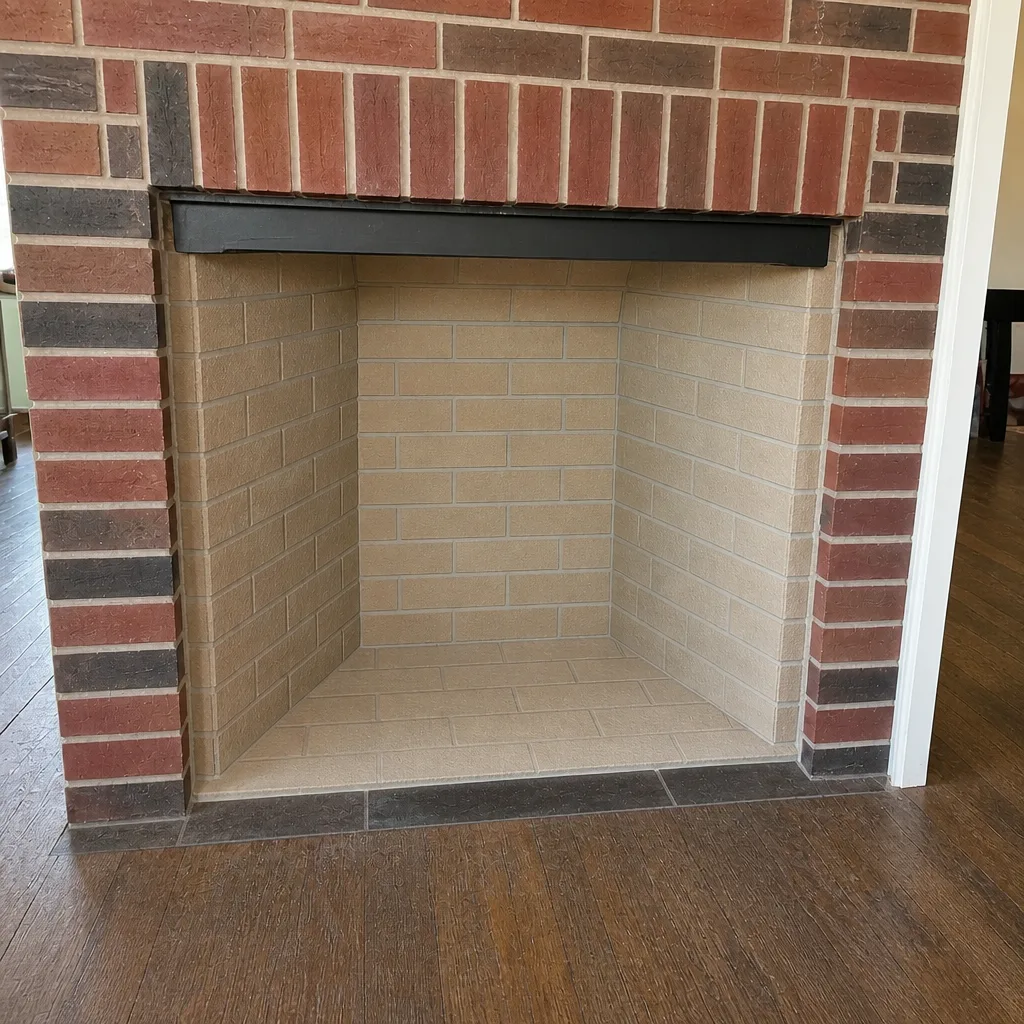
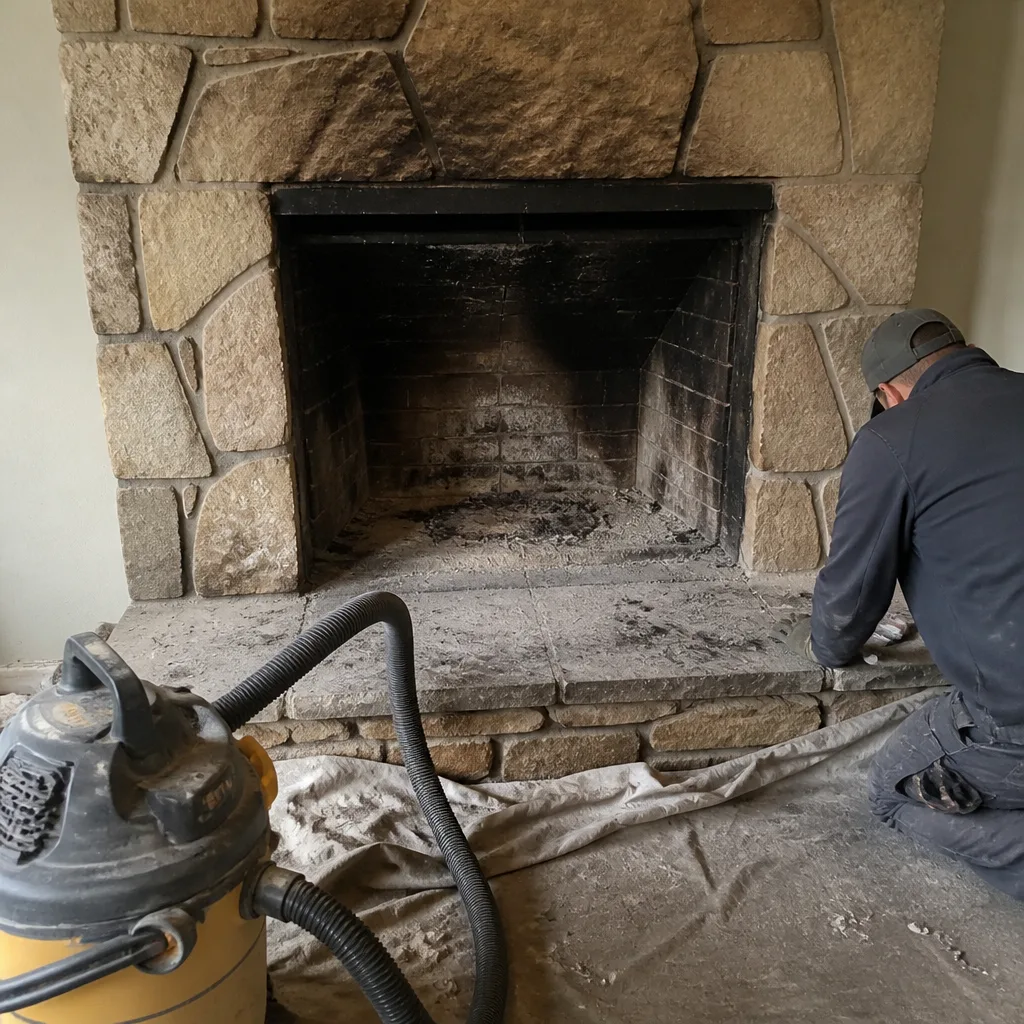
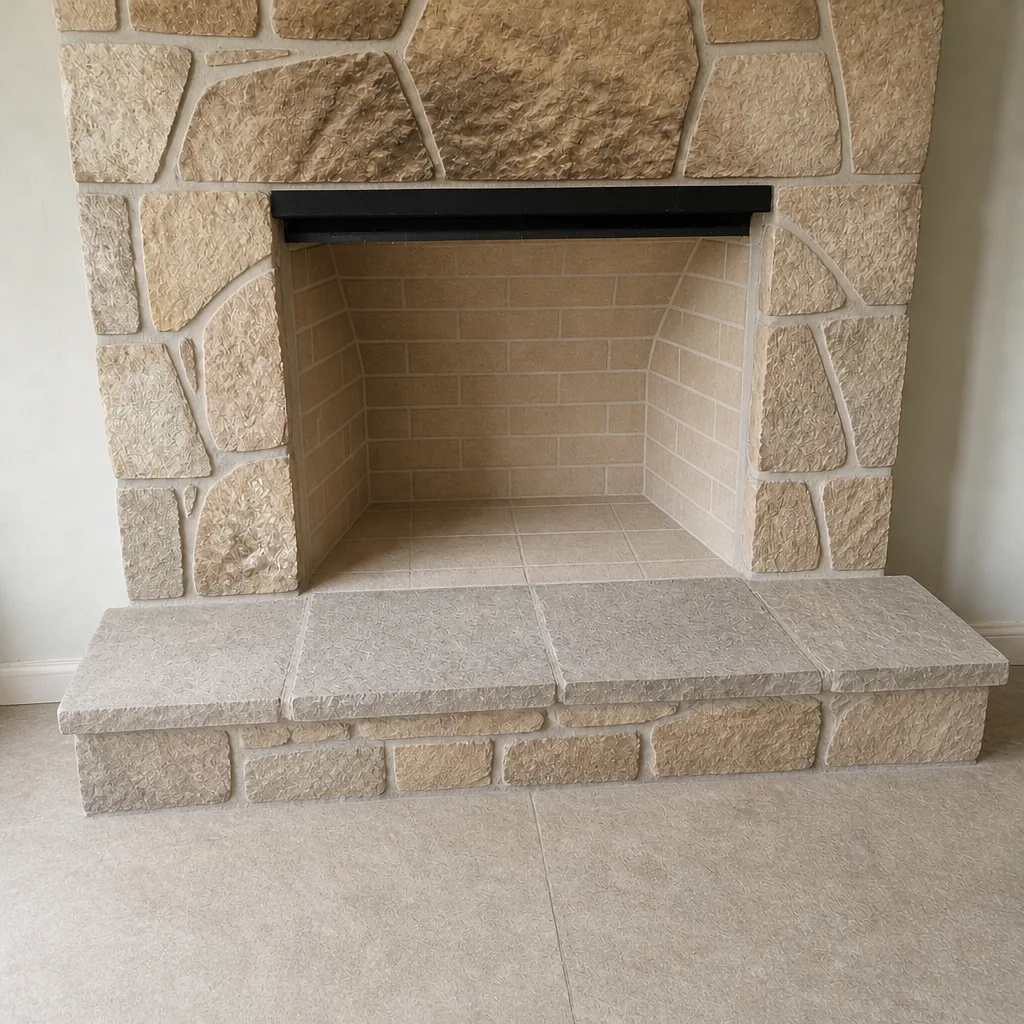
See the difference
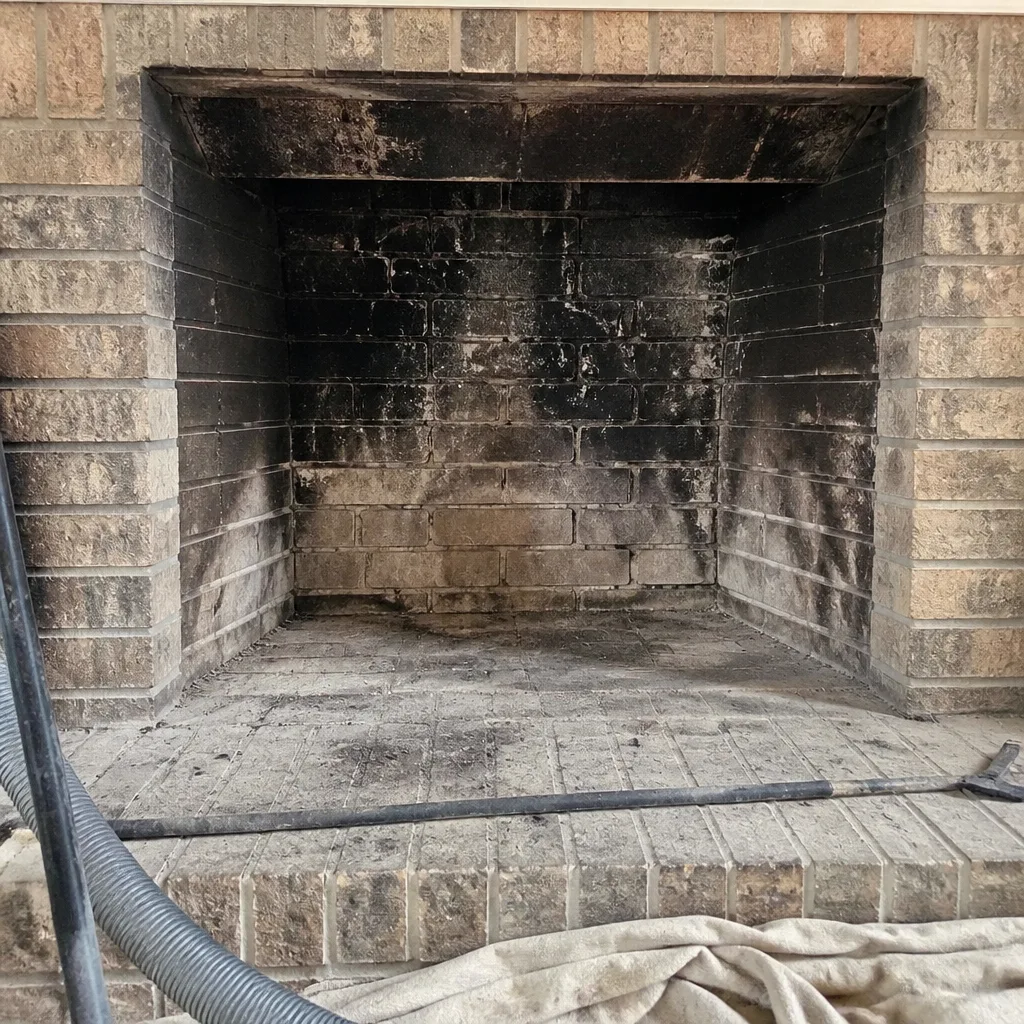 Before
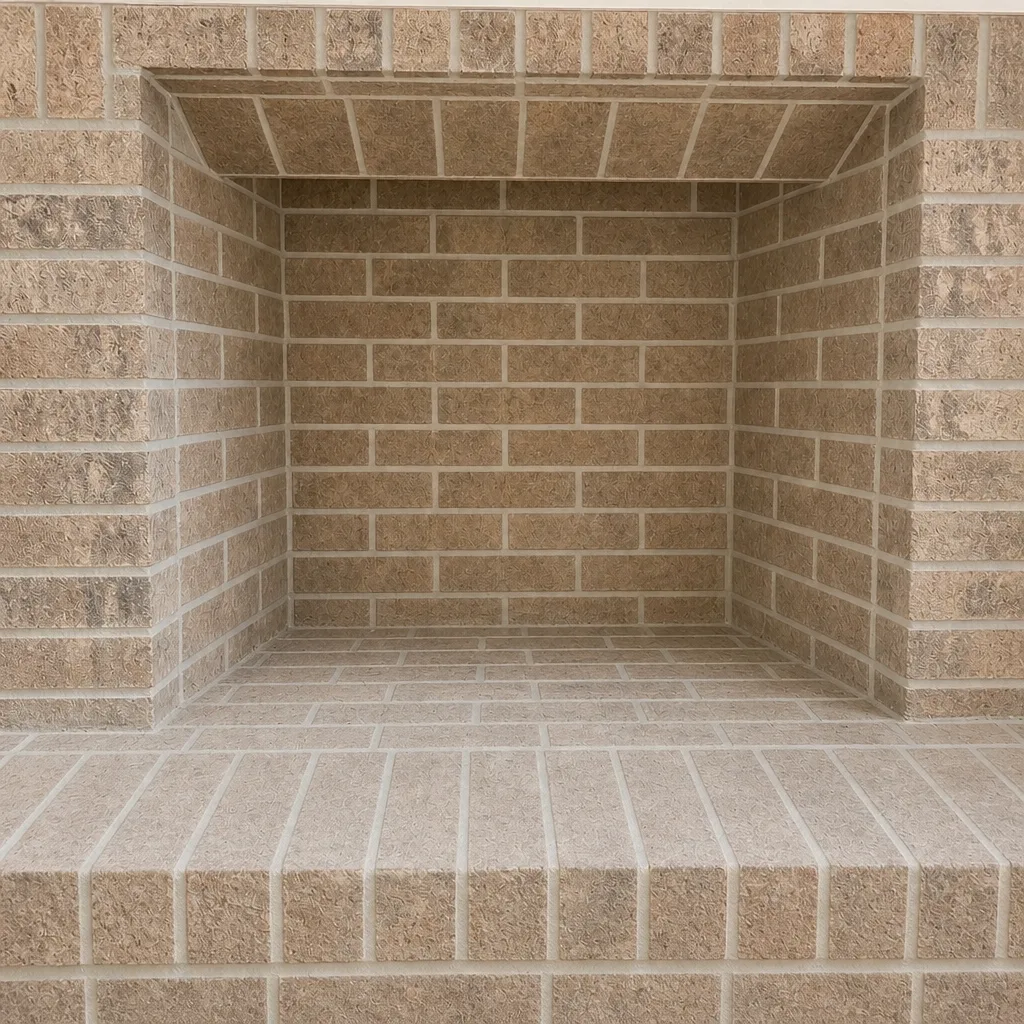 After
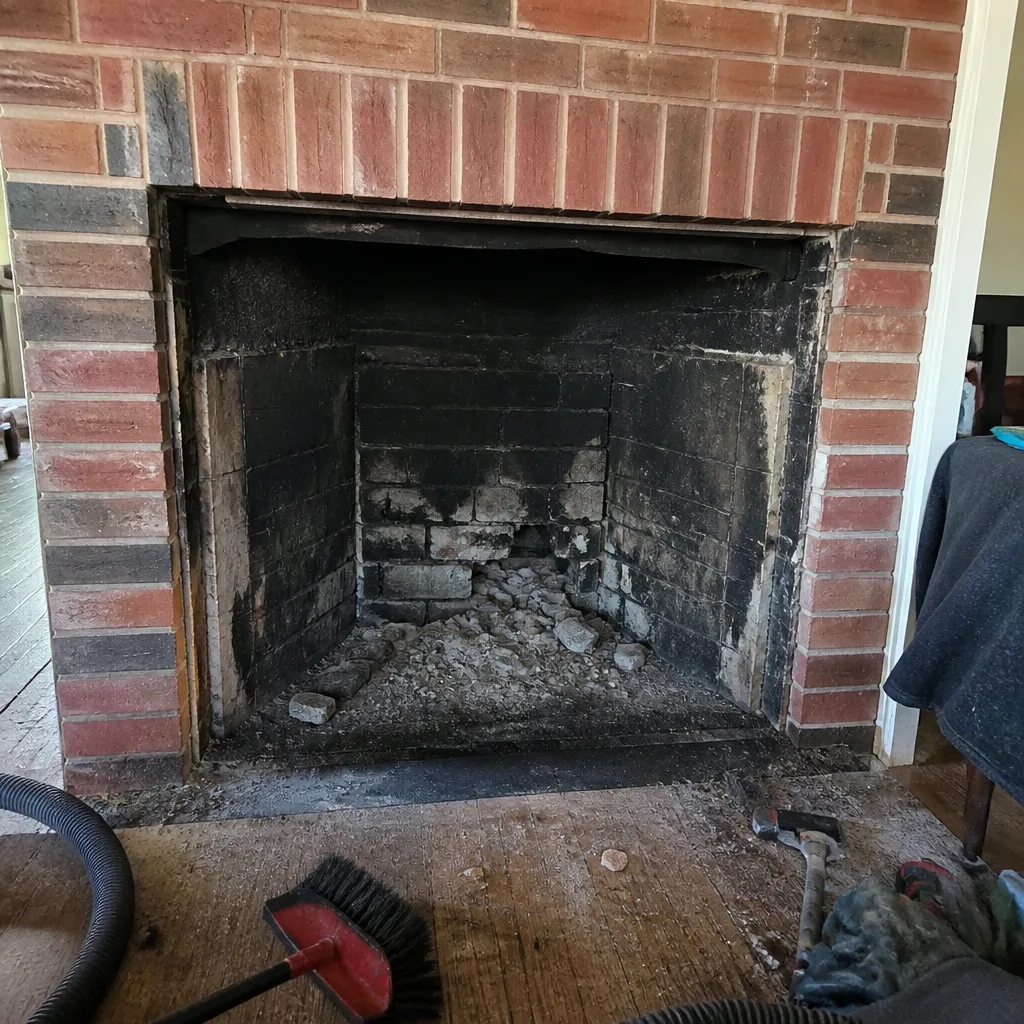 Before
 After
 Before
 After
When to Call a Professional
Call a professional chimney sweep in Broken Arrow if any of the following apply: you can’t remember the last time the chimney was inspected, you’ve burned more than a cord of wood since the last sweep, you see glazed or shiny creosote on the flue walls, the damper doesn’t seat cleanly, the chase cover shows rust or seam failure, you’ve had a chimney fire (even a small one), the chimney has visible damage after a storm, the fireplace smokes into the room, or the masonry shows white staining or crumbling. A yearly inspection is the baseline for every home with a fuel-burning appliance; the items above are the reasons to call sooner than that.
Flagship Chimney Sweep offers free estimates in Broken Arrow. We handle the sweep, the inspection, and the repair as one integrated service, using professional-grade materials on every job including DuraFlex liners and HeatShield resurfacing. Call (866) 389-4464 to book. We answer 24/7. Fast dispatch from 7am to 7pm, Sunday through Friday.
Frequently Asked Questions
A chimney in Broken Arrow should be swept once a year if you burn wood regularly, and inspected once a year regardless of how much you burn. The ideal window is late September through October, before the October – March burn season, and a second look after storm season in April – June is smart for the exterior. If you burn more than a cord of wood a season, or notice glazed creosote, sweep sooner than once a year. Call (866) 389-4464 for an exact quote on your chimney – estimates are free.
Skipping chimney maintenance lets creosote build up and lets small defects go unnoticed, both of which raise the risk of a chimney fire and let water or carbon monoxide into the house. It also means slow damage (masonry cracks, a failing chase cover, a compromised liner) gets worse over a full seasonal cycle instead of being caught early. The repair bill is almost always larger than the maintenance bill. Call (866) 389-4464 for an exact quote – estimates are free.
Yes, for most of them. Ground-level checks (cap, chase cover, exterior staining), firebox checks (firebrick, damper, visible creosote), and the interior signs of water intrusion are all safe for a homeowner to check without a ladder. Anything above ground level, the flue interior with a camera, and smoke chamber parging require a certified sweep. Call (866) 389-4464 for an exact quote – estimates are free.
Shine a flashlight up the firebox and look at the flue walls. A thin, flaky layer of creosote is normal between sweeps. A shiny, glazed surface means the creosote has passed into a stage that’s harder to remove and raises fire risk, and that’s a sign to book a sweep promptly. If you can’t see clearly, a professional camera inspection will tell you exactly what’s there. Call (866) 389-4464 for an exact quote – estimates are free.
Late September through October is the best time to book a chimney inspection in Broken Arrow, because it lands just before burn season starts and gives you time to plan any repair before you need the fireplace. If you’d rather skip the fall rush, July and August work well too; the schedule is lighter and any repair can be done calmly. Call (866) 389-4464 for an exact quote – estimates are free.
You need a new liner when the inspection shows the old one has failed: gaps, cracks, or damage that compromise the appliance’s safety or drafting. It’s not an upsell if you can see the evidence. Ask for the camera photos or the inspection report so you can see the problem yourself, and ask whether the work can safely wait. A straightforward inspection should always answer both questions. Call (866) 389-4464 for an exact quote – estimates are free.
The Bottom Line
A chimney maintenance checklist for Broken Arrow only works if it’s timed to this climate, not a generic seasonal template. The core rhythm is simple: sweep and inspect in September or October, before burn season; check the exterior after every storm; watch the damper, smoke chamber parging, and chase cover because they’re the three items that fail quietly; and keep a yearly record so you can see what’s changing and prove what you’ve maintained. Most homeowner checks are safe from the ground and firebox; anything above ground level or inside the flue needs a certified sweep. Do those things, and the chimney stops being a system you think about only when something goes wrong.
If you’d like a professional set of eyes on your chimney in Broken Arrow, Flagship Chimney Sweep handles the sweep, inspection, and repair as one service, with professional-grade materials on every job. Call (866) 389-4464 for a free estimate. We answer 24/7. Fast dispatch from 7am to 7pm, Sunday through Friday.
Written by the team at Flagship Chimney Sweep.